
Quick Comment: An Introduction To Deterrence

Thank you to everyone who has subscribed! I really appreciate your support and hope you enjoy future articles. A special thank you to those who have subscribed. Should anyone else wish to subscribe you’ll be supporting me and also be able to comment and ask me questions. However, if you are just hear to read the article, thank you very much for your support and interest in my work!
In a previous article, I spoke briefly about the damaging effects of JD Vance’s Munich Security Conference speech on Taiwanese security. In that article I mentioned deterrence. Today I want to give a more in depth insight into what this is and why it matters.
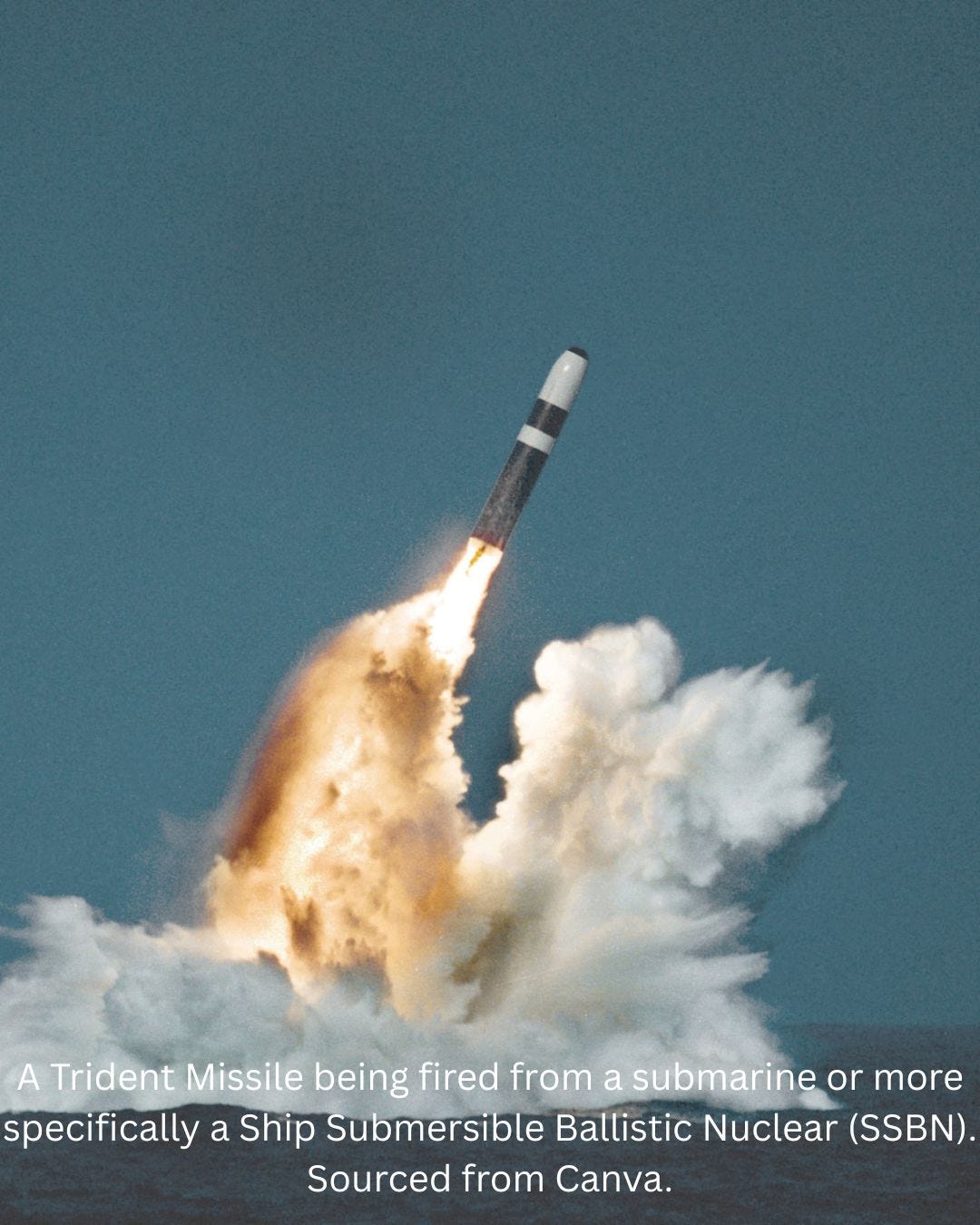
At its core, deterrence is an influence strategy. One used to manage risk and escalation in conflict. You have probably heard of deterrence primarily in the same sentence as ‘nuclear’, however deterrence is also used to prevent conventional (non-nuclear) and even some cyber attacks as well.
Within deterrence there are two main strategies:
Imposition of cost
Denial
Imposition of cost: a strategy which threatens severe penalties in the event of an attack or escalation. These could be anything from financial sanctions to reciprocal military action. The idea is to ensure that the other party understands that the potential consequences of acting will be so damaging that the intended action is simply not worth taking. Mutually assured destruction (MAD) works in this way.
Denial: a strategy which seeks to make success seem so unfeasible that the other party simply does not see any point in wasting its resources trying.
A strategy of deterring through the imposition of cost depends upon the three Cs:
Capability - you must have the capability to impose costs. This could mean possessing nuclear weapons, a military advantage or even the required network through which to impose damaging financial sanctions.
Credibility - you must appear credible in your threat to impose penalties. In a democracy this includes ensuing visible public support for your deterrence.
Communication - you must be able to communicate both capability and credibility to your adversaries. Communication can come in the form of declaratory policies (like nuclear posture reviews) and verbal statements. Additionally, it can be signalled through exercises and tests. It is critical that capability ad credibility are not just communicated but comprehended by the other side. For this reason there is a lot of care taken when translating declaratory policies to ensure that subtle differences in meaning do not impact what is being said.
For a strategy of denial, capability and communication are key.
Extended Deterrence
In my article on the Munich Security Conference, I spoke briefly about the the US’ nuclear umbrella for Japan and South Korea. This is an example of extended deterrence.
Extended deterrence is the strategy which aims to deter an attack or escalatory behaviour towards a third party state. This is very challenging as the same three Cs are needed. Operationally this means that capability may need to be projected into a region thousands of miles away. Additionally, though a state can generally be relied upon to defend itself, it is not always clear that another state will have the will to act on behalf of a third party in a crisis. For example, given the Trump administration’s treatment of Ukraine and NATO, Japan and South Korea are increasingly uncertain about the credibility of their nuclear umbrella. Would Trump really honour the US commitment to push the button if it came to it? Would the US really aid them in the event of a conventional attack?
Part of appearing credible in East Asia involves the stationing of US troops in both countries. They not only represent capability, but also credibility as they provide a very real reason for the US to involve itself in a regional conflict. An attack on Japan or South Korea would endanger those troops.
Hopefully this article was a useful introduction to deterrence. I’ll be discussing it a lot more in upcoming pieces. As always, thank you for your support.